


brændz
The First Brand Decision Shouldn't Be the Logo
Published November 20, 2026 · By Oliver Poek
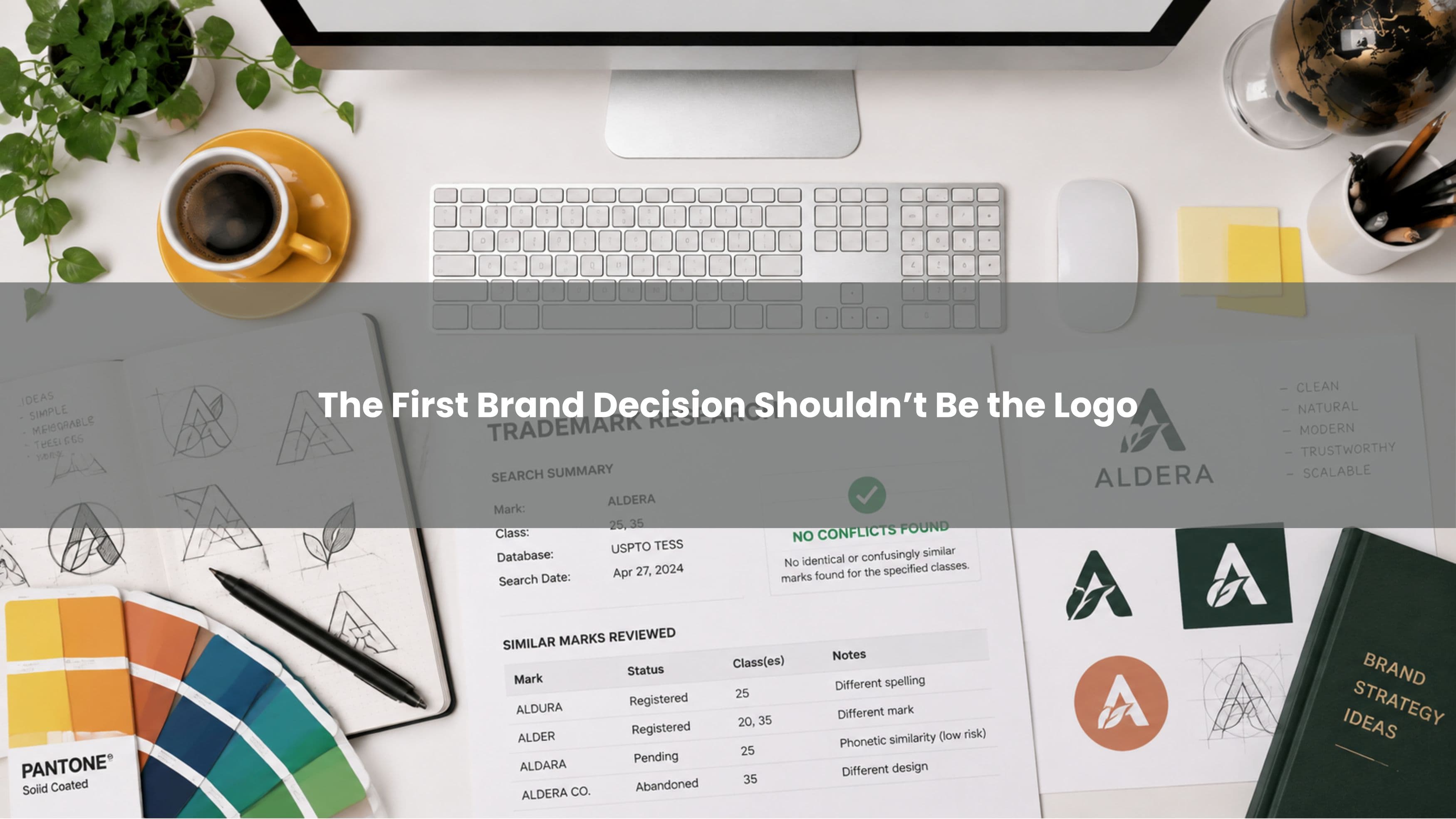
When launching a new business, branding often begins with visual identity. Companies invest time in designing logos, selecting colors, and developing marketing materials before determining whether their chosen brand name can be legally protected.
However, an attractive logo cannot resolve underlying trademark conflicts. Before investing in visual design, businesses should prioritize brand name validation to understand whether their proposed identity presents potential legal or commercial risks.
A strong brand begins with informed decisions, not simply an appealing design.
Why Brand Name Validation Comes First
Brand name validation involves evaluating whether a proposed name is suitable for commercial use and potential trademark protection.
A name may sound original, have an available domain, and align perfectly with a company's positioning while still resembling an existing trademark.
These similarities can create difficulties during registration or lead to disputes after the brand enters the market.
Validating a name early helps businesses identify potential obstacles before investing heavily in their identity.
Trademark Before Branding: Getting the Sequence Right
Considering a trademark before branding helps businesses establish a more reliable foundation for development.
A company may spend significant resources on logo design, website development, packaging, and promotional materials, only to discover that its chosen name conflicts with an existing trademark.
Changing a name after these investments can disrupt marketing plans, delay launches, and create unnecessary expenses.
By addressing trademark considerations early, businesses can make better decisions about which names deserve further creative investment.
The Importance of Trademark Clearance
Trademark clearance helps determine whether existing trademark rights could interfere with a proposed brand.
This process extends beyond searching for identical names. It also considers similarities in pronunciation, appearance, meaning, and the relationship between goods or services.
For example, two names may have different spellings but sound nearly identical when spoken. Depending on their commercial context, this resemblance could create a likelihood of consumer confusion.
Clearance does not guarantee registration, but it provides valuable information for evaluating potential risks.
Connecting Trademark Research With Brand Naming Strategy
An effective brand naming strategy combines creativity, commercial relevance, and legal considerations.
Businesses should consider whether a name communicates their intended positioning, distinguishes them from competitors, and offers potential for protection.
Conducting trademark research during the naming process allows companies to compare possible names before selecting a final identity.
Rather than developing an entire brand around one unverified name, businesses can assess multiple options and identify those with fewer apparent conflicts. This gives teams a stronger basis to validate the name first before committing further creative resources.
This approach supports informed decisions without unnecessarily restricting creativity.
Building a Brand on a Stronger Foundation
Visual identity remains an important part of branding, but it should follow careful evaluation of the name it represents.
Businesses preparing to launch new products, establish companies, or enter additional markets benefit from integrating brand name validation into their early planning.
A structured approach helps align trademark considerations with branding objectives, reducing the likelihood of expensive changes later.
By prioritizing trademark clearance and research before finalizing visual assets, businesses can invest more confidently in creating a distinctive and sustainable brand identity.